A clinic blog has two kinds of work that should never be tangled together.
The clinician or content team owns the article: title, explanation, image, author, category, and the decision to publish. The website design owns the layout: type, spacing, header, article width, sharing, related posts, comments, and the call to book.
When those are stored together, every article becomes a small web-design project. A new card style means editing old posts. An Arabic article exposes a layout that was only tested in English. One accidental change can make a single post look unlike the rest of the clinic.
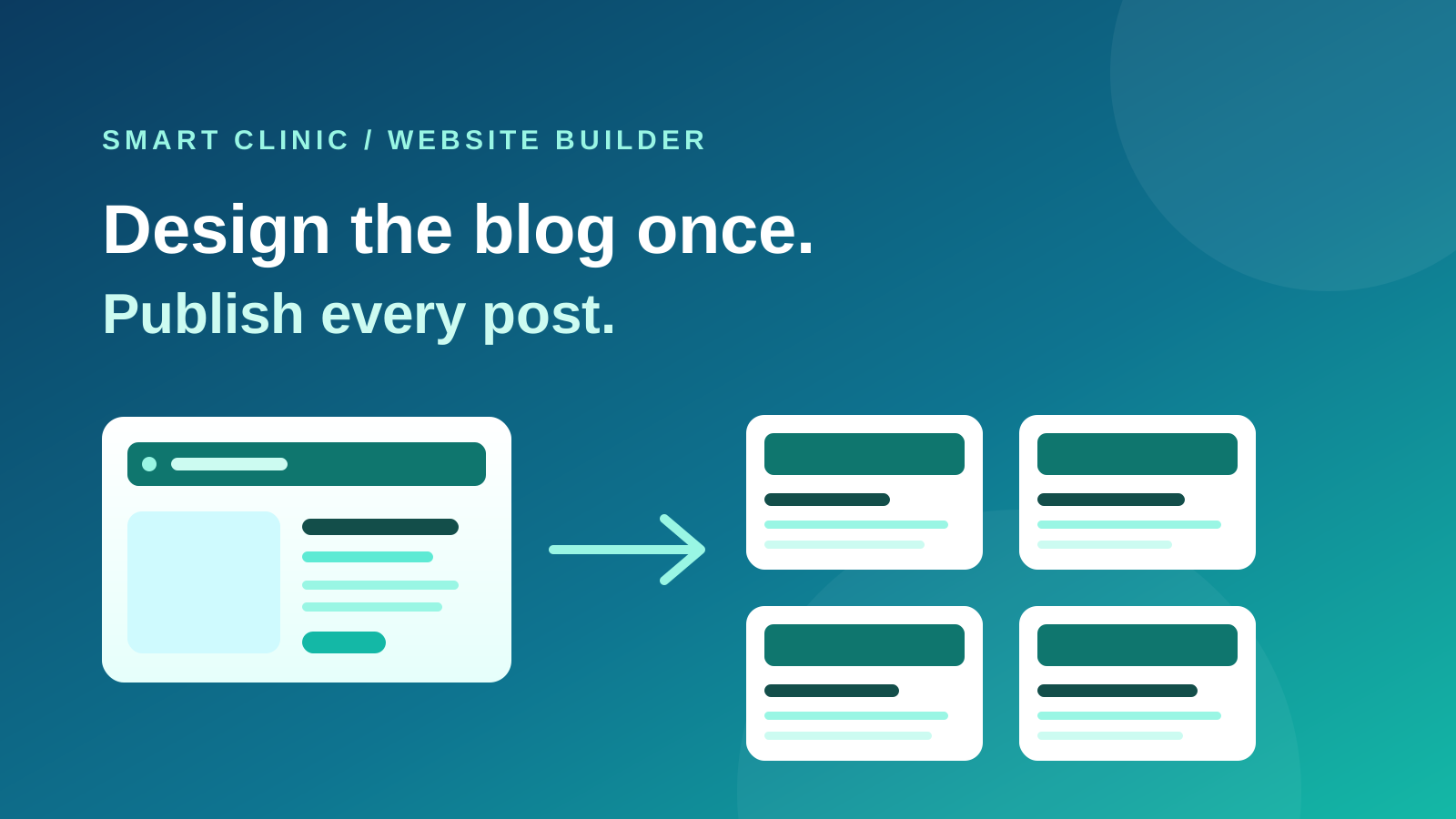
The Smart Clinic blog separates them. Write the content. Design the blog once. Every route combines the right article with the shared design.
That is still the point. What changed around it is the rest of the publishing job: a second language, a second pair of eyes, help that stays a proposal, and a number you can believe.
The dated release is on What’s new. The evergreen module page is Website Builder.
Four templates, not hundreds of pages
Blog home, Single post, Category, and Tag are protected templates inside the visual builder. They are not ordinary pages to rename or add to the menu. They are the designs used whenever a visitor opens the matching blog route.
The Single post template can include title and metadata, featured image, rich content, table of contents, author profile, categories and tags, sharing, related articles, previous and next, approved comments, and a clinic call to book. Change the order, hide what is unnecessary, or restyle the whole composition. The next article needs content — not another layout.
Pick a starting look, preview it with sample content, then adjust. Desktop, tablet, mobile, English, and Arabic are not separate hand-built versions.
Two languages, one article
A clinic that serves Arabic and English patients used to keep two blogs, or skip one language. Now one article exists as a pair. Each language has its own title, body, address, and search listing. You can publish Arabic today and English next week.
Search engines see them as the same article. The last-updated date moves when you actually edit.
A second pair of eyes when you need it
Health content that reaches the public should have been read by someone qualified. A one-person clinic still hits publish. A team can turn on review: send the draft, preview it on the real site, ask for changes with a note, then approve. You can see what changed between versions. The writer cannot approve their own post when review is on.
Comments wait for approval. Unapproved comments and commenter emails stay off the public page.
AI that does not publish
The blocking step for a busy clinician is almost never the idea. It is the summary, the search listing, the rewrite, the translation. AI can draft those next to the field they belong in. Nothing applies until you accept. It will not invent a price, a statistic, or a medical claim.
You can require an extra review for any post that used AI.
Know whether anyone read it
A view count that records the clinic server once an hour is worse than no number. Views now count real visitors. You can see whether they came from search, social, a link, or typed the address. You can see whether anyone finished the article, and whether it led to a booking click or a signup.
A newsletter form builds a confirmed list. The visitor gets a confirmation email and can leave in one click.
Settings that were missing
Turn comments off for the site if you do not want them. Choose how many posts appear on a page, and whether lists use previous/next, page numbers, or load more. Authors have a public page, and the bio actually shows on the article. Tables stay tables. A YouTube or Vimeo video stays a video.
The practical result
The clinic can build a recognizable publishing voice without asking an author to become a web designer. The designer can improve every article without opening every article. Arabic and English can live as one article. A colleague can read a clinical claim before patients do. And the team can see which posts were actually useful — instead of guessing from a number that was never true.